Disc problems & nerve irritation
Herniated & Bulging Disc Care in Simi Valley
Disc problems are common, treatable, and frequently misunderstood. Many are managed conservatively, and what shows up on a scan does not always match how you feel.
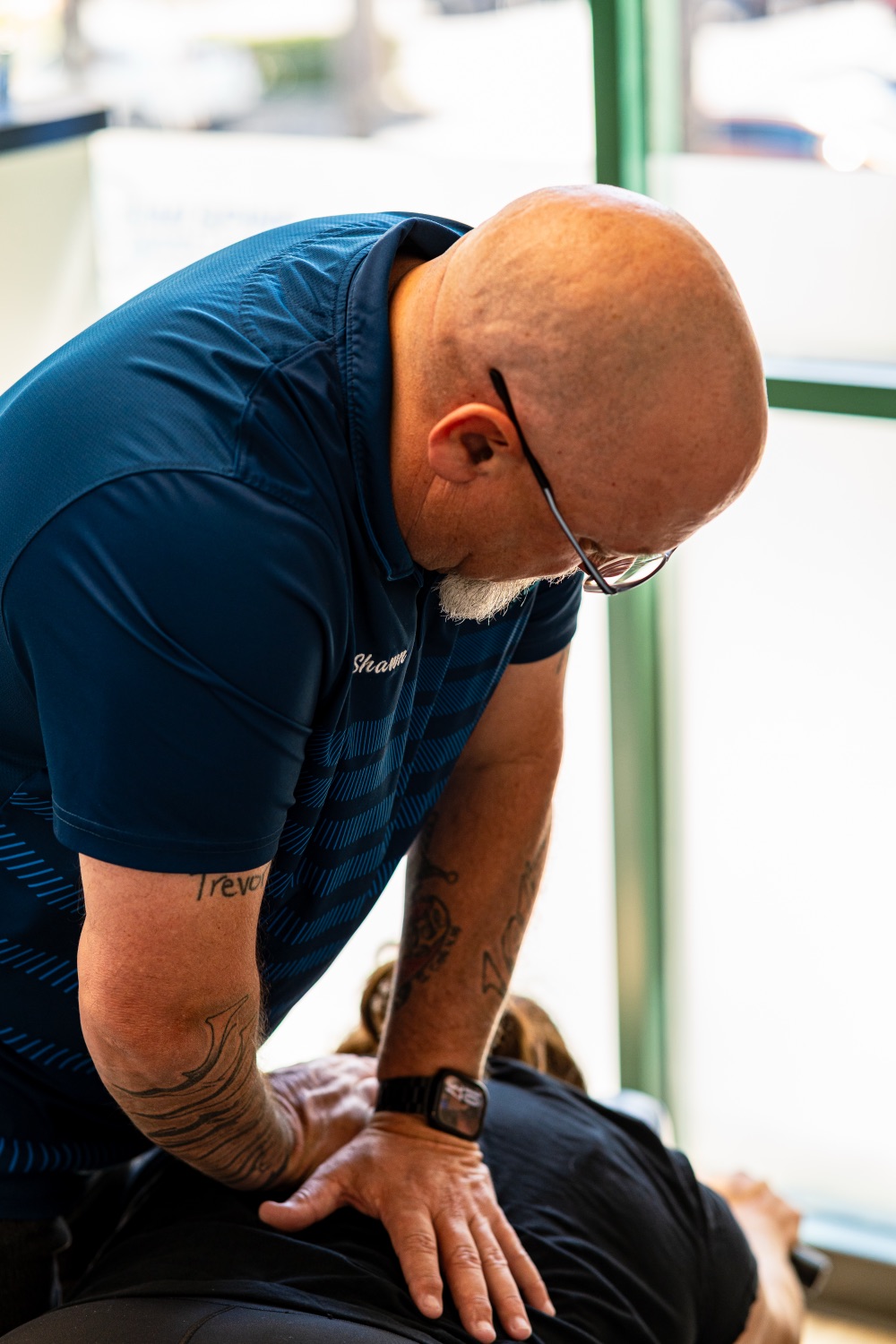
Between the bones of your spine sit discs that act as cushions. They absorb load, allow movement, and sit close to the nerves that exit the spine. When a disc bulges or herniates, it can irritate nearby structures and cause pain, stiffness, or symptoms that travel into an arm or leg.
A disc diagnosis sounds alarming, and patients often arrive assuming surgery is the only path. For many people that is not the case. A large share of disc-related problems are managed with conservative care.
Bulging versus herniated: what is the difference?
The terms get used interchangeably, but they describe different things.
A bulging disc means the disc has spread outward beyond its normal border, fairly evenly, without the inner material breaking through. Think of it as the disc losing its shape.
A herniated disc means some of the softer inner material has pushed through a tear in the tougher outer layer. This is more focal, and it is more likely to press on or chemically irritate a nearby nerve.
Which one you have influences the plan, but it is not the whole story. How you present clinically matters more than the label.
Why your scan may not match your symptoms
This is one of the most useful things a patient can understand about disc problems.
Disc bulges and even herniations show up on imaging in plenty of people who have no pain at all, and the likelihood increases with age. At the same time, some people have significant symptoms with relatively unremarkable imaging.
This is why we do not treat a scan. We evaluate the person, then use imaging where it helps answer a specific question. A finding on a report does not automatically explain your pain, and it does not automatically mean surgery.
Symptoms patients commonly describe
Depending on which disc is involved and whether a nerve is irritated, patients may notice:
- Localized back or neck pain, sometimes sharp with certain movements
- Pain that radiates into an arm, or into the buttock and leg
- Numbness or tingling following a specific path
- Weakness in a particular muscle group
- Symptoms that worsen with sitting, bending, coughing, or sneezing
- Stiffness that is worst in the morning or after being still
When symptoms travel into the leg, this overlaps with what people call sciatica. Our page on sciatica covers that symptom pattern in more detail.
How disc problems are treated here
Most disc-related cases we see start with conservative care. Depending on your evaluation, a plan may include:
- Non-surgical spinal decompression — designed to gently unload the disc
- Flexion-distraction — controlled, table-assisted movement
- Chiropractic adjustments — when appropriate for the findings
- Cold laser therapy
- PEMF therapy
- Corrective exercise and mobility work
- Massage therapy — for the muscle guarding that often comes along
Spinal decompression is often the treatment patients ask about specifically for disc problems. It uses controlled mechanical distraction to gently stretch and unload a segment of the spine. It suits some patients and not others, which is why candidacy is determined after an evaluation rather than assumed.
When another provider is the right answer
Conservative care is not right for every disc problem. Progressive weakness, symptoms that keep escalating despite appropriate treatment, or certain neurological findings may call for imaging, a specialist opinion, or surgical consultation.
If that is what we believe you need, we will say so directly. Our job is to help you find the right next step, not to keep treating something that needs different care.
Frequently Asked Questions
Can a herniated disc heal without surgery?
Many disc-related problems are managed conservatively, and a substantial number of patients improve without surgery. Whether that applies to you depends on your examination findings, symptoms, and how you respond to care. Some cases do require surgical consultation.
Is chiropractic safe with a herniated disc?
It depends on the specific findings. Techniques can be modified, and gentler approaches such as flexion-distraction or non-surgical decompression are often used instead of traditional manual adjustments when a disc is involved. An evaluation determines what is appropriate.
What is the difference between a bulging disc and a herniated disc?
A bulging disc extends outward beyond its normal border without the inner material breaking through. A herniated disc involves inner material pushing through a tear in the outer layer, which is more focal and more likely to irritate a nearby nerve.
Does spinal decompression work for herniated discs?
Non-surgical spinal decompression may be considered as part of a conservative plan for certain disc-related conditions. Research continues to develop, and it is generally used alongside other care rather than as a standalone solution. Not every patient is a candidate.
Do I need an MRI before treatment?
Not always. Whether imaging is appropriate depends on your history, examination, symptom severity, and response to initial care. If you already have recent imaging, bring it or tell us where it was done.
Feel Better • Move Better • Live Better
Not sure what’s causing it?
That’s what an evaluation is for. We’ll look at what’s happening and talk through your options.
Book an EvaluationAlso see: Sciatica