
Spinal Decompression or Surgery? How to Think Through the Choice
When a scan shows a herniated disc and the pain has been going on for weeks, people start hearing the word “surgery.” Sometimes from a doctor, sometimes from a friend who had it done, sometimes from the internet.
Then someone mentions non-surgical spinal decompression, and the question becomes: which one?
I’m Dr. Shawn DeCloedt, and we offer spinal decompression at our office in Simi Valley. I want to walk through how I think about this decision, honestly, including the cases where I’d tell you to go see a surgeon.
These Aren’t Really Competing Options
The framing of “decompression versus surgery” makes it sound like you have to pick a team. That’s not how it usually works.
For most disc-related back and neck pain, the first step is conservative care: time, movement, hands-on treatment, exercise, and sometimes decompression. Surgery is typically considered when conservative care hasn’t worked, or when there are signs that a nerve is being damaged and waiting would make things worse.
So the more useful question is: is it reasonable for me to try conservative care first, and if so, is decompression a good part of that?
For a lot of people the answer is yes. For some it’s no. The rest of this article is about telling the difference.
Who Tends to Do Well With Decompression
In my experience, the people who respond best usually share a few things:
- Pain linked to a bulging or herniated disc, or nerve irritation from one
- Symptoms that change with position, such as better lying down and worse sitting
- Pain that travels into a leg or arm, like sciatica, without significant weakness
- No major red flags on the exam
- A willingness to do the exercises and habit changes that go with it
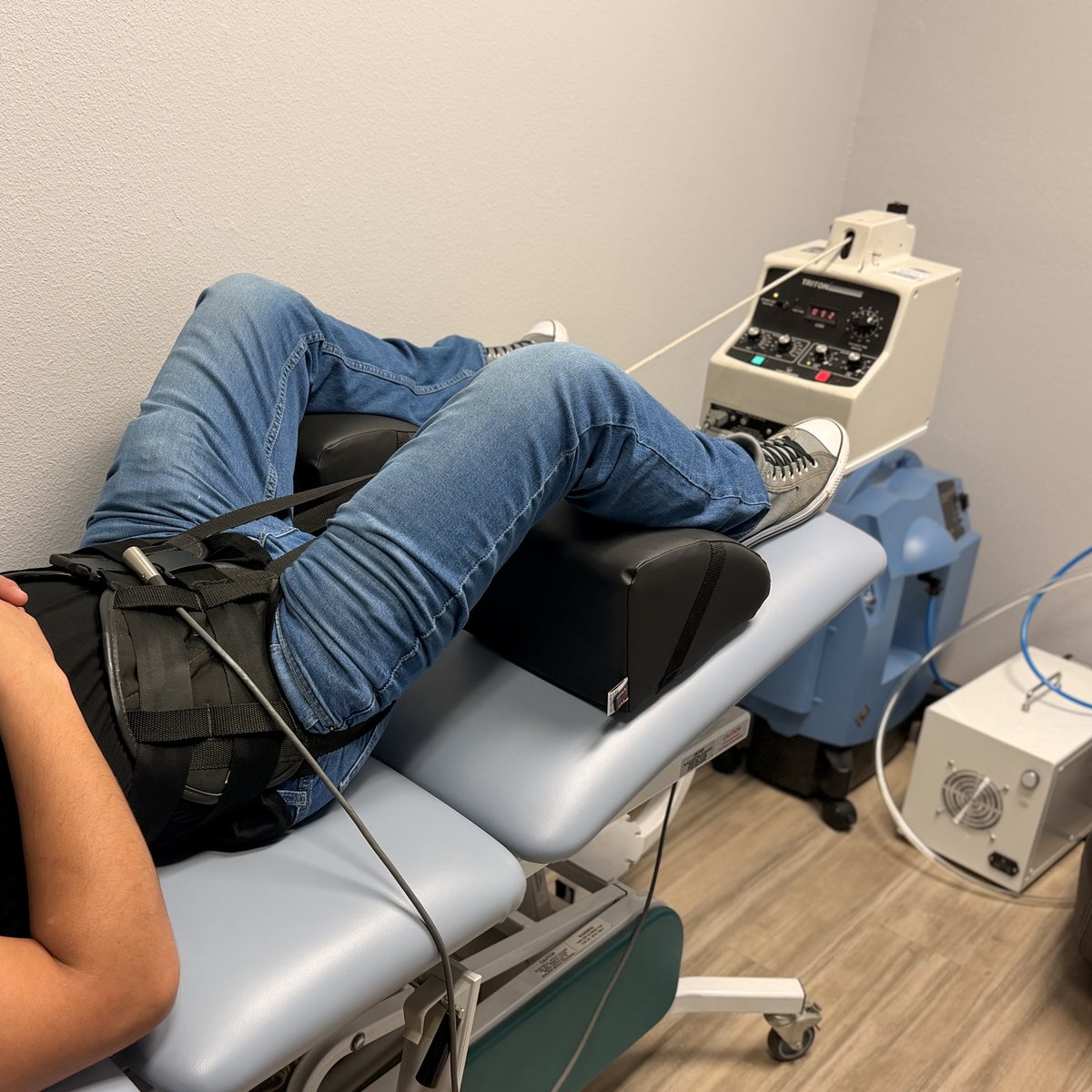
Decompression gently and repeatedly stretches the spine on a computer-controlled table to reduce pressure on the disc and the nerves around it. It is done as a series of sessions, usually combined with adjustments, exercise and soft-tissue work rather than on its own. You can read more about disc problems and how we approach them.
Who Should Not Start With Decompression
Decompression isn’t appropriate for everyone, and I’d rather say so before you book.
It is not a good fit if you have:
- A spinal fracture, or advanced osteoporosis
- A spinal tumor or infection
- Certain surgical hardware or a prior fusion in the area
- Significant or progressive weakness, such as a foot that is starting to drag
- Pregnancy
If any of those apply, the right next step is a medical evaluation, and we’ll help you get one.
When a Surgical Consult Makes Sense
I send people to spine surgeons. Not often, but when it’s the right call, it’s the right call.
A surgical opinion is worth getting when:
- Weakness in a leg or arm is getting worse
- Pain is severe and hasn’t improved after a reasonable stretch of conservative care
- Imaging and the exam point to a problem that conservative care isn’t likely to fix
- You’ve tried decompression and other care, and you’re not seeing progress
Seeing a surgeon doesn’t mean you’re having surgery. It means you’re getting a full picture of your options from someone who can offer the one we can’t. Plenty of people get that opinion and continue with conservative care for a while longer, with the surgeon’s agreement.
Symptoms That Can’t Wait
Some symptoms are not a “which treatment” question at all. Go to an emergency room or call 911 if back pain comes with:
- Loss of bladder or bowel control, or trouble urinating
- Numbness in the groin, buttocks or inner thighs
- Sudden or rapidly worsening weakness in one or both legs
- Fever, unexplained weight loss, or a history of cancer
- A serious fall, car accident or other significant injury
These can signal nerve compression or another problem that needs urgent medical care.
How We Decide Together
When someone comes to us asking about decompression, the first visit is an evaluation, not a sales pitch. We go over your history, look at any imaging you have, and examine how your spine moves and how your nerves are working.
From there, one of three things happens:
- Decompression is a good fit, and we lay out a plan with a clear point where we check whether it’s working.
- It’s worth trying, with conditions, such as getting imaging first or checking in with your physician.
- It isn’t the right fit, and we tell you so and point you to who can help.
If we start and you’re not improving in the first part of the series, we stop and talk about it. Continuing something that isn’t working isn’t care.
Getting a Straight Answer in Simi Valley
If you’ve been told a disc is the problem and you’re trying to decide what to do next, come in for an evaluation. You’ll leave with a straight answer about whether decompression makes sense for you, even if the answer is no.
Our office is on Alamo Street in Simi Valley, and we see patients from Moorpark, Thousand Oaks, Chatsworth and across Ventura County. You can book an evaluation online, or read more about how spinal decompression works and our approach to back pain.
This article is intended for general educational purposes and does not replace individualized medical advice, diagnosis, or treatment. Treatment recommendations are made after an appropriate evaluation.
Frequently Asked Questions
Should I try spinal decompression before surgery?
For many disc-related back and neck problems without serious nerve signs, a period of conservative care is a reasonable first step, and decompression can be part of that. The exceptions are the red-flag symptoms below, and progressive weakness. Those need a medical or surgical evaluation, not a trial of conservative care.
How do I know if I'm a candidate for spinal decompression?
It takes an examination. The people we see do best usually have pain from a bulging or herniated disc or irritated nerve, symptoms that change with position, and no signs of significant or worsening nerve damage. Some conditions rule it out, including fractures, advanced osteoporosis, spinal tumors, infection, and certain implants or prior fusions.
How long before I know if decompression is working?
Decompression is done as a series of sessions over several weeks. We expect to see some change in the first part of that series. If we don't, we stop and talk about other options rather than keep going.
Can I see a surgeon and still do decompression?
Yes. Getting a surgical opinion doesn't commit you to surgery, and many people do both: see a spine surgeon to understand their options while trying conservative care. We are happy to work alongside your other providers.
What symptoms mean I should go to the emergency room?
Loss of bladder or bowel control, numbness in the groin or inner thighs, sudden or rapidly worsening weakness in a leg, or back pain with fever or after a serious fall or accident. These can signal a problem that needs urgent medical care. Don't wait for a chiropractic appointment.
Feel Better • Move Better • Live Better
Start with an evaluation
Simi Valley Spine & Wellness · 3655 Alamo St, Suite 201, Simi Valley, CA 93063 · (805) 581-2310
Schedule an Appointment